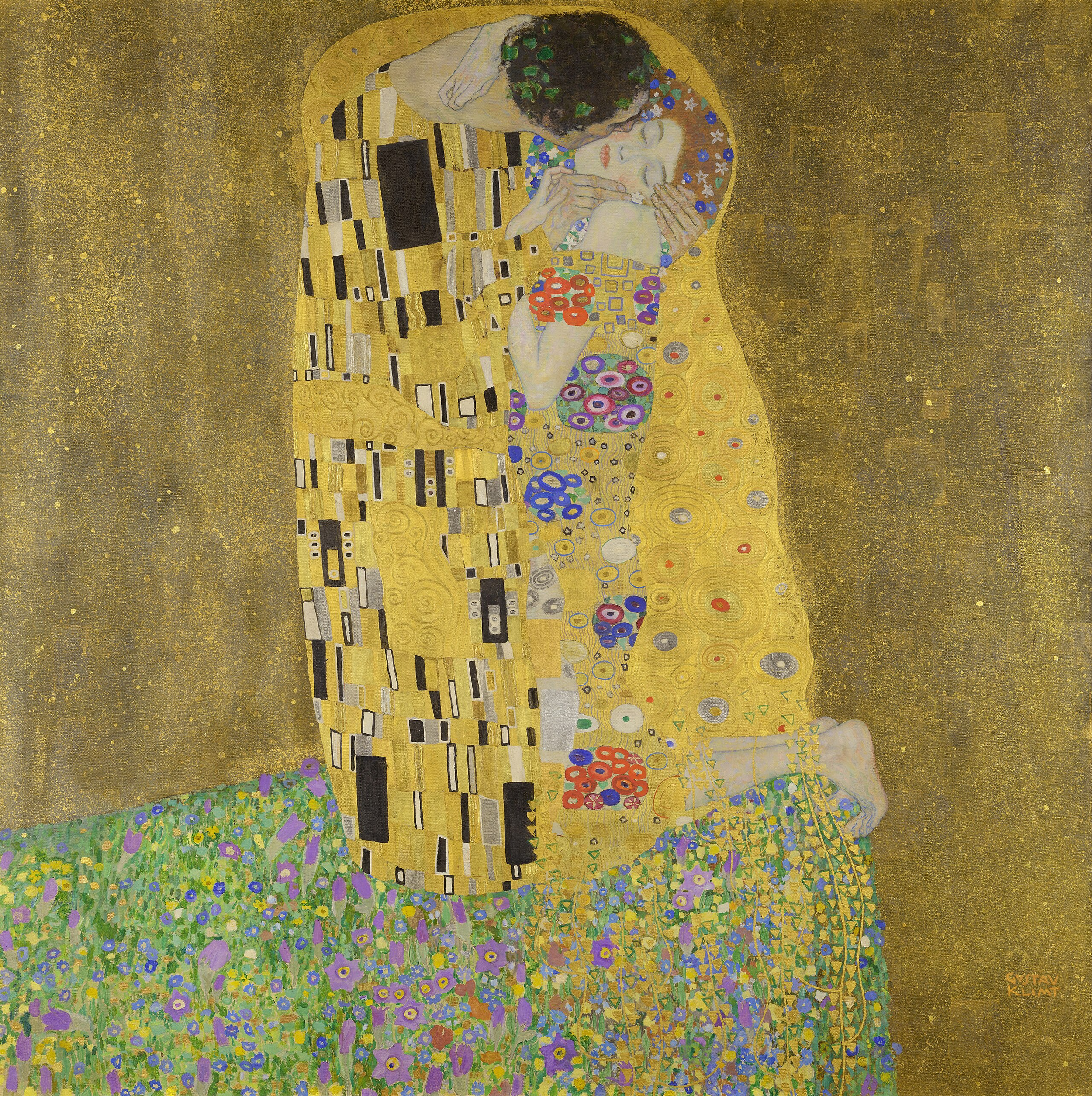
Gustav Klimt — The Kiss (1907-1908)
What is love ?
Love has long been described as nothing more than a refined version of humanity’s most primitive impulses— desire dressed in language acceptable to society.
First comes desire, we are told.
Love follows after, as the garment desire puts on to be seen, permitted, and legitimized.
And so, quietly, we learn to believe this:
that beneath every beautiful vow, every poetic sentence, every act of devotion, there lies sexual attraction and instinct, waiting at the core.
Love may look noble, but in this view, it is merely a byproduct— a decorative consequence of instinct.
But what if the order were entirely reversed?
What if desire did not give birth to love, but love existed first— as fundamental, as primary, as deeply rooted as desire itself?
What if love were not a secondary effect of sexual drives and instincts, but a phenomenon as original as sex itself— and sex merely one language through which love reveals itself?
We most often go wrong by confusing means with essence.
When love disappears and only the act of sex remains, that act easily turns into obligation, into a mechanism for maintaining connection, into a repetitive performance meant only to discharge the animalistic urge.
In those moments, a quiet emptiness settles in.
Bodies draw close, yet something remains untouched— an unnameable hollow between two people.
Conversely, when love exists first, physical expression enters an entirely different dimension.
It is no longer the consumption of pleasure, but a language of union— a moment in which one existence reaches toward another.
In that context, the act becomes sanctified.
So where, then, does the core of this ultimate goal reside?
Love is not a strategy to escape loneliness.
It is not proof that one is not alone.
It is not a social condition meant to signal normalcy or continuity.
Nor is love found in the possession of another’s body.
Its deepest meaning lies in recognizing and receiving the other’s spiritual being— their most intimate inner self.
To love is not to acquire perfection, but to discover singular value within imperfection, and to affirm that value without condition.
A true moment of love is one in which two beings move beyond the limits of the body— a moment where one existence fully receives another, and both are immersed in a golden sense of timelessness, a profoundly inner experience.
When we love, we are no longer beings who seek to possess, but beings who reflect one another—and grow together.
Love is not a byproduct rising from lower instincts.
It is the highest destination of what it means to be human.
When desire fades, what remains — love, or emptiness?
“Love is the ultimate and the highest goal to which man can aspire.”
“Love is as primary a phenomenon as sex. Normally, sex is a mode of expression for love. Sex is justified, even sanctified, only as long as it is a vehicle of love.”
— Viktor E. Frankl, Man’s Search for Meaning
END OF REFLECTION